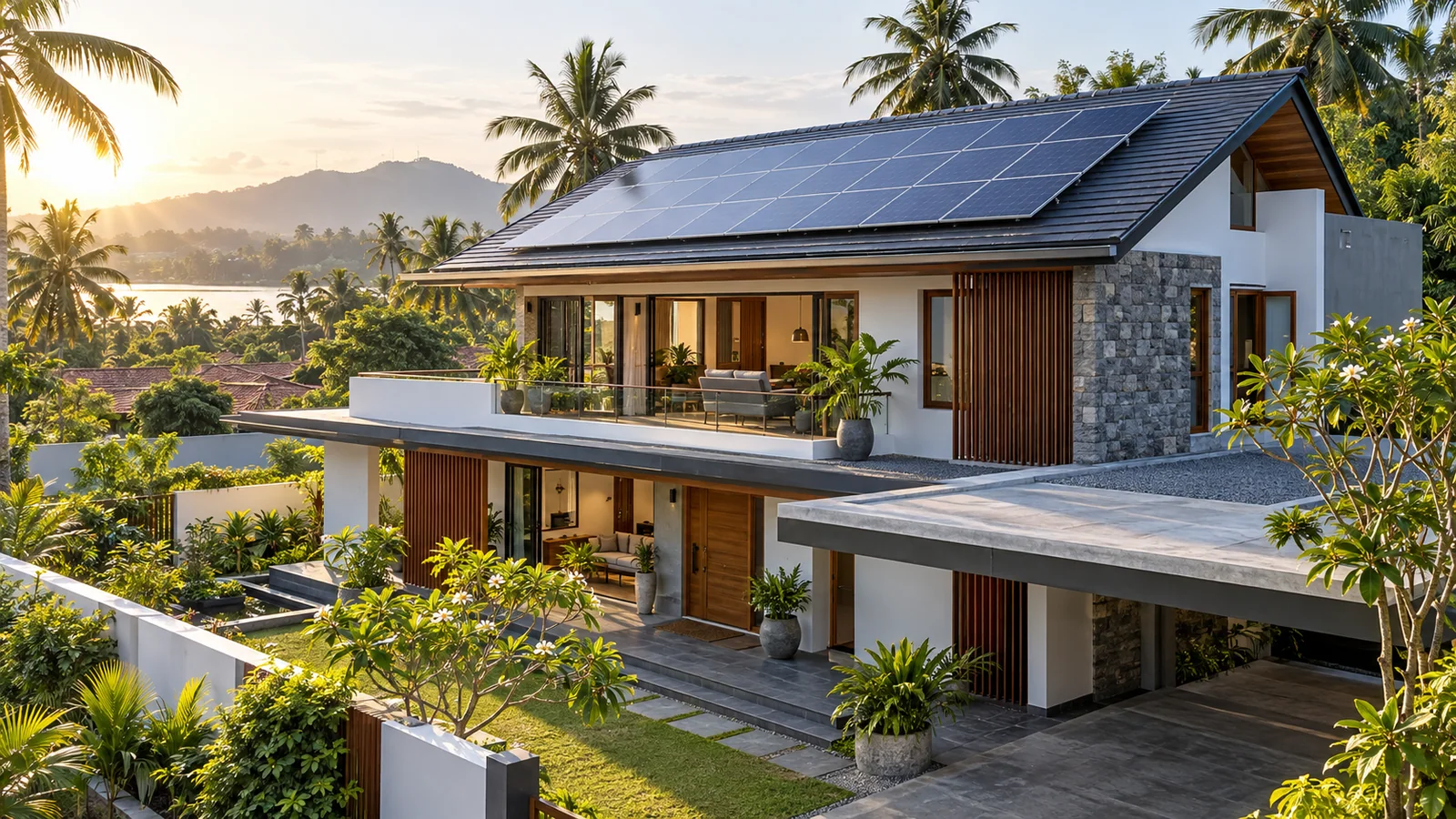
Hero image is an AI-generated illustrative concept, not a completed Structa project.
Short answer: Make a new house solar-ready by coordinating the roof form and structure, likely panel zones, shade, inverter and battery space, cable routes, earthing and maintenance access before construction. A qualified electrical professional should confirm the system design and the current approval and connection process with the relevant electricity provider. A roof that looks suitable in a render is not proof that it can safely support a particular solar installation.
Why plan solar before the roof is built?
Retrofitting panels can mean working around roof edges, water tanks, parapets, trees, neighbouring buildings and already-installed services. During design, the team can reserve an accessible panel area, avoid avoidable shade, coordinate cable pathways and discuss where electrical equipment can be kept dry, ventilated and serviceable. This does not guarantee a particular energy yield: the final output depends on the actual roof, equipment, orientation, shading, weather and system operation.
For a house in Colombo, Gampaha, Negombo or another Sri Lankan location, start with the exact plot and roof—not a generic direction such as “always face north.” A solar designer should assess the site-specific sun path and shade across the intended panel area.
Five design decisions to make early
- Reserve an uninterrupted roof zone. Mark likely panel areas on the roof plan and keep future access routes in mind. Avoid placing water tanks, antennas or other equipment where they unnecessarily shade the planned zone.
- Coordinate the roof structure. Have the structural engineer review the proposed roof and the solar mounting approach. The load path, fixing method, wind exposure, waterproofing and maintenance access all matter. Do not assume a roof is suitable based on its appearance alone.
- Plan electrical routes. Coordinate a route from the roof to the inverter and main electrical board before ceilings and finishes are closed. Keep equipment locations accessible and protected as required by the electrical designer.
- Decide whether battery storage is part of the brief. Battery systems need a suitable location, ventilation and safe clearances according to the selected equipment and applicable standards. A battery is not automatically required for every household.
- Allow for maintenance and replacement. Panels, isolators, inverters and batteries will need inspection or eventual replacement. Avoid hiding equipment behind fixed joinery or making the roof difficult to reach safely.
Ask the electricity provider about the current process
The Ceylon Electricity Board provides an online route for rooftop solar PV clearance and publishes a retail rooftop-solar application process. Requirements and programme terms can change, and the relevant process may depend on the electricity provider and system type. Confirm the latest application steps, technical requirements, metering arrangements and commercial terms directly with the provider before purchasing equipment. Do not rely on an old quotation or social-media post as a current tariff promise.
Solar-ready design checklist
- Roof plan reviewed for shade, usable area and safe access
- Structural approach and mounting details reviewed by qualified professionals
- Cable pathway coordinated with the electrical layout
- Inverter and any battery location selected for access and protection
- Earthing, isolation and electrical safety included in the design
- Current clearance and connection steps checked with the relevant provider
- Equipment choice and expected output assessed by a qualified solar designer
When comparing a solar-ready home budget, keep the house design, structural work, electrical scope and solar equipment as separate, clearly described items. Structa’s construction cost guide explains why a defined scope matters; you can also try the AI-powered BOQ calculator for an early planning estimate, not a contractor quotation.
Frequently asked questions
Should I choose a roof shape only to fit solar panels?
No. Balance solar potential with rain protection, room planning, structure, appearance, cost and maintenance. A solar designer and architect can coordinate the roof as part of the whole house.
Can I add solar panels later?
Often a retrofit is possible, but the roof structure, access, shade and electrical route must be checked. Planning for these items early can reduce avoidable retrofit work.
Does solar guarantee a lower electricity bill?
No fixed saving can be promised without a site and usage assessment and the applicable current utility arrangement. Ask for assumptions, system size, expected generation and ongoing costs in writing.
Is a battery necessary?
Not in every system. Whether storage makes sense depends on household usage, backup needs, budget, equipment and the applicable connection arrangement.
Official reference
- Ceylon Electricity Board, Rooftop Solar PV clearance and retail application process
- Ceylon Electricity Board, Renewable energy and rooftop solar programme overview
This guide is general design information, not an electrical specification, engineering certification, utility approval or promise of financial savings. Confirm project-specific decisions with qualified professionals and the current electricity provider.
Use this guide as general information
Site conditions, authority requirements and construction decisions vary by project. Confirm project-specific architectural and engineering matters with appropriately qualified professionals before relying on them for construction.